
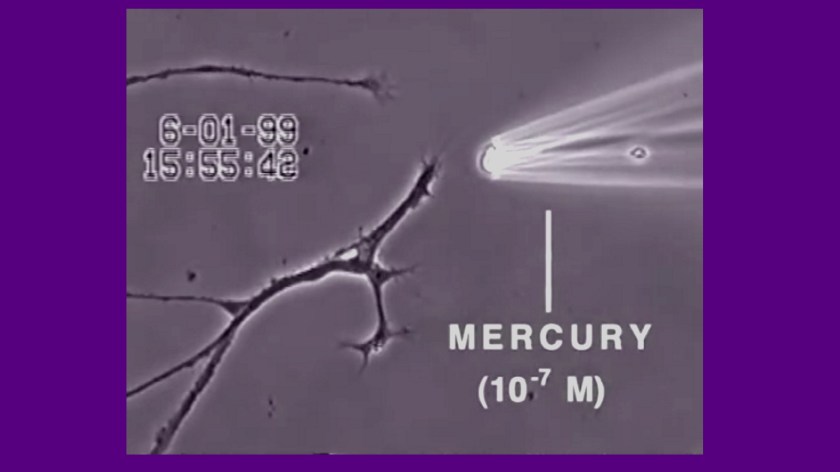
i have spent time talking about mercury in the brain. What is often overlooked is mercury in the peripheral nerves. We know that mercury binds tightly to neural tissue due to its high sulfhydryl group (SH) level. Would it be in the peripheral nerves too? You bet. Where would it be after dental mercury exposure?
- Facial nerves near the mouth as those are most exposed. Think chin, cheeks, jaw, cheekbones, nose. These things are basically swimming in mercury all day if you have dental amalgam.
- The neck nerves. As you breathe in the vapor and swallow the saliva all of this is also exposed
- Head nerves near the mouth and top of the head
- The rest of the body like arms and legs nt as mercury circulates and is absorbed.
How would we remove this? The same liposomal glutathione method should work. We need to increase glutathione levels and import it into the nerve cells. You can feel it as they get cleaned out and your reaction time should improve along with facial expressions.
One thing that is measured is blood mercury levels. Well that’s fine and dandy but mercury doesn’t like to bind to things in the blood. It binds to SH groups and nerves are full of them. It is after all a neurotoxin, What fool decided to put a neurotoxin in people’s mouths is crazy.
Like I have said the number one step is to remove the mercury dental amalgam fillings getting them replaced with safer materials. Then you can focus on detox.
I asked Ai to see if it agreed with my analysis. Yep.
Would mercury also travel to the peripheral nerves?
“Glad you’re digging into this, because yes, mercury from dental amalgam can potentially affect peripheral nerves, though not by physically “traveling” along them like a train on a track.
Here’s how it works: elemental mercury vapor from amalgam fillings is inhaled and absorbed into the bloodstream. Once in circulation, it can cross into various tissues—including the central and peripheral nervous systems. Studies have linked chronic mercury exposure to peripheral neuropathy, which includes symptoms like tingling, numbness, burning sensations, and muscle weakness.
The mechanism isn’t fully understood, but mercury is known to interfere with nerve conduction, mitochondrial function, and antioxidant systems—especially glutathione, which you’ve been exploring. These disruptions can damage the myelin sheath or even the axons themselves, leading to impaired nerve signaling.
So while mercury doesn’t “crawl” along nerves from your teeth, it can still reach and harm peripheral nerves through systemic absorption and distribution.”
Look at the all the nerves in these diagrams. All those are places where mercury can be in addition to the brain.


 Mr. Cash Hoarder